January 14, 2026 • Gurugram, India
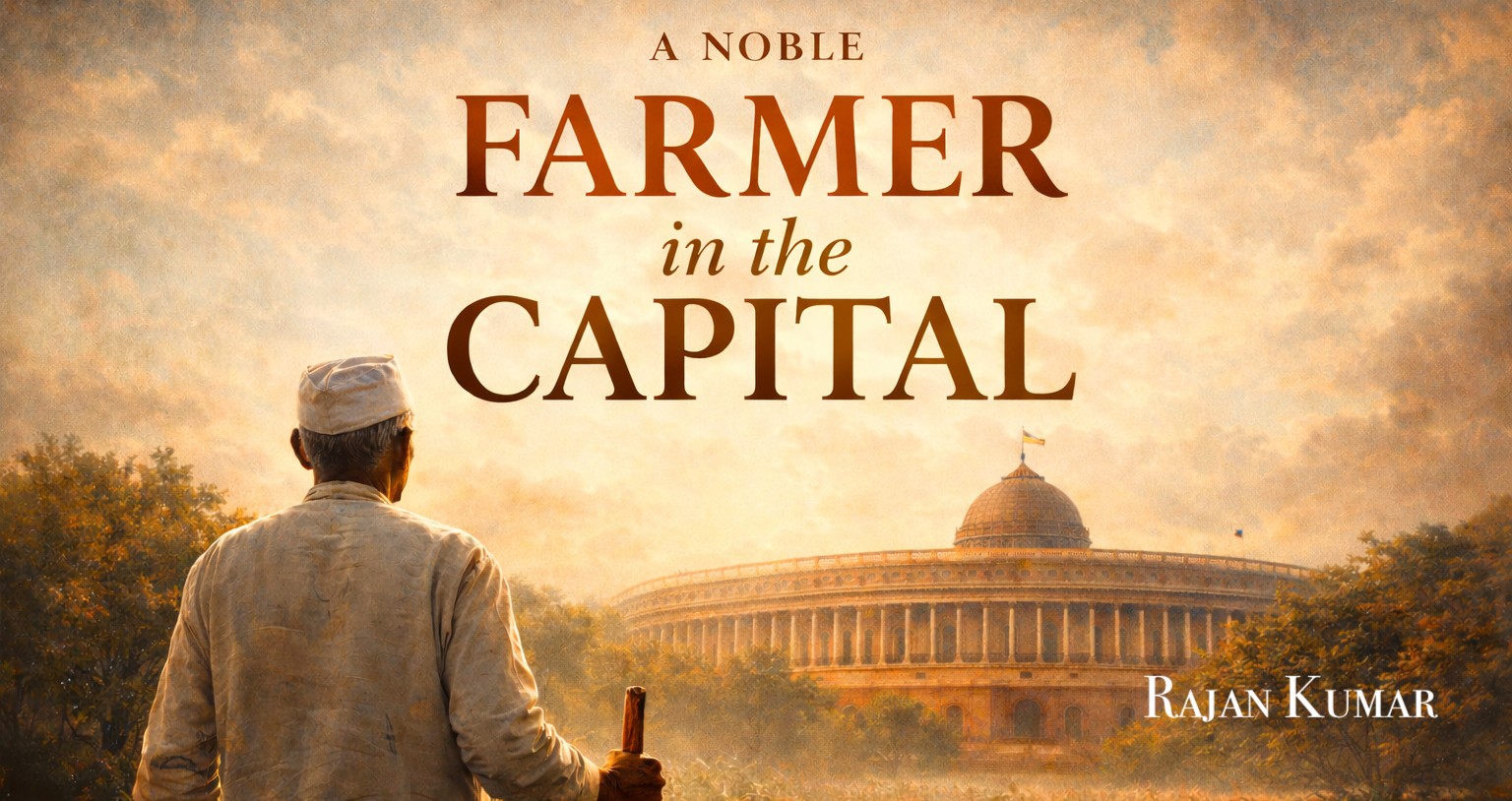
A Noble Farmer in the capital
This story explores a man who couldn't bargain with his values and eventually paid the price for it. It reveals how the political landscape slowly crushes noble intentions and how choosing integrity in a corrupt system can cost everything and leave one isolated.
Author: Rajan Kumar
It was 20th August, 1979. The air of Delhi was humid and heavy, as if it was holding its breath.
Chaudhary Charan Singh sat at his heavy wooden desk.
77 Years of life pressed upon his shoulders. Prison walls from the British era, peasant marches, broken alliances, endless debates about land and dignity for farmers had all led to this moment. He had refused to take shortcuts.
Before him on the desk, there was a single sheet of paper; a note from INC Party. It was brief, cold, brutal and final.
Indira Gandhi, the woman who had imposed emergency 2 years ago and had got many leaders, including him arrested, had played the most decisive move for her comeback, after heavy defeat in 1977 elections.
23 days ago, she had promised Chaudhary everything he wanted for his farmers. Protection and Structural reforms. But little did the Noble farmer knew, it was just for isolating him out of his rebellion camaraderie, the Janta Party.
Politician within Chaudhary, was hesitant. He knew he was dealing with the devil. But, the farmer within him took over. Memories of Noorpur, the brutality of Zamindars on farmers, the suffering of peasants flashed before his eyes. It melted him. He thought, if he becomes PM, he would fix it for once and all, even if it meant jeopardizing his political career. He will risk it.
After the deal, Janta party got dismantled. Morarji Desai had to resign as PM.
With MPs from INC party added to Chaudhary’s side, he has the majority on paper and was appointed as Prime Minister, by the President, on 28th July 1979. But was given a deadline to prove his vote of confidence by 3rd week of August in the Parliament.
It was supposed to happen at 11:00 am today.
Just as he was getting ready, the note has arrived.
It demanded obedience. Burning all the emergency related files, dismantling the special court and dropping all the charges against her and her son Sanjay Gandhi. Only then they would support him in the parliament. No was not an option. Either he would agree or Indira will withdraw her support.
Chaudhary felt blackmailed. He knew this was not just a demand.
He did not look up from the paper. In his mind, Delhi dissolved. He was a barefoot boy in Noorpur, standing before his father with a stolen compass trembling in his palm. He remembered the stern voice of his father, unyielding yet gentle.
“A man can lose his way once. But if he loses his honesty, he is lost forever.”
He had seen this script before. Zamindars has spoken the same language when they threatened the farmers. Yield, or starve. Sign, or suffer.
The rebel within him was provoked. The farmer rose before the politician could speak.
“They want me to barter the law for a chair.” Chaudhary said. His voice a low raspy growl. “I have spent my entire life fighting the Zamindars who owned the land and the souls. I will not become a puppet of the Zamindars of Delhi.”
There was pin drop silence in the room for a minute.
Then advisors began to swarm, “Just a small delay, Chaudhary Saab,” one pleaded. “Tell them we will 'review' the cases. Once the vote is passed, we can see...”
A "politician" would have signed the paper, stayed in power for five years, and found a way to justify it later. The Nobelist refused.
"What will I tell to farmers then ? If I drop these cases, I am telling every farmer in India that the law is only for the poor." he asked. “That the law bends for the powerful and breaks for the poor ?”
The silence in the room answered him.
“I am a peasant’s son,” he continued. “We do not fear heat, hunger, or honesty.”
He reached for a sheet of white paper. With a steady hand, he began to write. He knew he wasn't just writing a resignation letter; he was writing his exit from the history. It was a refusal to bargain with the time itself.
By 10:00 AM, the clock was ticking toward the opening of the Lok Sabha.
He stood up slowly and smoothened his Khadi kurta. Age had bent his spine, but not his will.
"Prepare the car," he commanded. “We are going to Rashtrapati Bhavan.”
The drive was short. As the black Ambassador car sped through the wide, tree-lined avenues of New Delhi, Charan Singh looked out the window. He saw the city that had always felt foreign to his rural heart. He had reached the summit, but the air at the top was thin and poisoned by conspiracies.
At Rashtrapati Bhavan, President Neelam Sanjiva Reddy received him. There was no small talk. Inside, history spoke in hushed tones. No cameras, no applause.
“I’m resigning.” Chaudhary said. “A majority bought by burying justice is no majority at all.”
As he walked back to his car, the news was already hitting the airwaves. He was now the “Prime Minister who never faced Parliament.”
Back at his residence, the phones wouldn't stop ringing, but Chaudhary didn't answer.
He walked out into his garden. The sky finally broke, and a light drizzle began to fall.
To the politicians in the Lutyens bungalows, he was a failure, a man who had been outmaneuvered by the "Iron Lady."
But as he felt the rain, He remembered Noorpur. The smell of wet earth. His father’s rough hands counting coins after harvest. Those hands had taught him that dignity mattered more than survival. Today, that lesson returned, calm and unshakeable.
He thought of Parliament. The speech he would never deliver. Words about farmers, about decentralization, about an India that lived beyond cities and corridors. They would never be spoken now. Perhaps that was intentional. Words, once spoken, had a way of unsettling comfort.
As he returned to his bungalow, for a moment, loneliness crept in. Not personal loneliness, but ideological. The loneliness of realizing that you are standing on the wrong side of a winning system.
Democracy, he reflected, was not failing. It was functioning exactly as designed. Elections for legitimacy. Power for continuity. The people for symbolism.
He should feel anger, but he doesn’t. What he felt was a dull acceptance, the kind a farmer feels when hail destroys a crop he already knew was fragile. He had seen the signs. The evasive smiles. The delayed assurances. The meetings where decisions were already made before he entered the room.
History will decide what tonight means, He thought. But he knew already.
He would be remembered as weak by those who measured strength in survival. As naive by those fluent in manipulation.
But somewhere, in a village, a famer will tell the story of a man who reached the top and refused to trade his soul for the chair beneath.
At night, as he turned off the lights, Charan Singh felt no regret. Only a quiet certainty.
They had removed him from power.
They had not moved him from truth!
Enjoyed reading this?
Receive posts like this in your inbox.
Join my email list